According to the 2009 Early Development Instrument results, one out of every four children in London is not ready to learn in Grade 1. (OEYC Data Analysis Coordinators, Early Development Instrument)
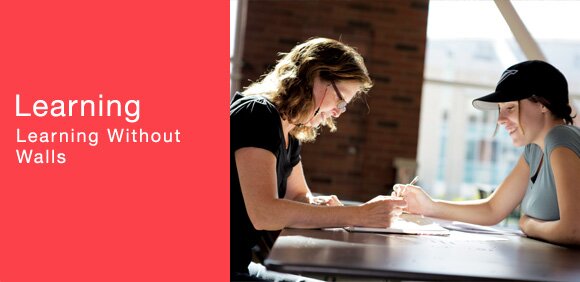
When Michelle first came to Reconnect, she was in an abusive relationship and addicted to Oxycontin, in and out of school and working full-time to help her mom pay the bills.
Learning
Are the three R’s important to you? Education opens up a world of possibilities and greatly impacts our employment, income and health. It allows us to stretch the limits of our intelligence and changes the way we view life. Alternative learning opportunities strengthen the economic development for all in our community.
-
1 in 4Readiness for School
-
51.9%Population with Completed Post Secondary Education
In 2009, in the London CMA, 51.9% of the population (15 years and over) had completed postsecondary education compared to 51.8% in the province and 50.8% in Canada. (Statistics Canada)
-
35,000Early Learning Initiatives
In September 2010, full-day early learning will be offered for 4- and 5-year old children in some London and area schools. By September 2015, full-day early learning will be available for up to 35,000 young children across Ontario. (Thames Valley District School Board 2010 Report to the Community)
-
81The Composite Learning Index (CLI)
In the CLI, Canada’s annual measure of progress in lifelong learning, London’s 2010 score was 81, which was higher than both the provincial and national scores.
-
18.9%Population that have Not Completed Post Secondary Education
18.9% of the population (15 years and over) in the London CMA, had not completed highschool in 2009. The rate was lower than the provincial average of 19.6% and the national average of 21.0%. (Statistics Canada)
-
11%English Language Learners
In the Thames Valley District School Board, in December 2009, 11% of elementary school student’s first language was neither English nor French compared to 9% for high school. In the London Catholic District School Board, 5.5% of elementary student’s first language was not English compared to 7.95% for high school. (London District Catholic School Board’s Director’s 2009 Annual Report and Thames Valley District School Board)
Upgrade your Essential Skills to reach your learning and employment goals. We are here to help you to find free adult skill building programs in your area. Find out more by contacting us at or by calling 519-681-7307. Today can be the start of a new future!
You don’t need to be in a classroom to learn. There are opportunities to enhance knowledge and wisdom all around you. Be observant in your surroundings. Open your eyes; open your ears.
Passport to Prosperity program has supported educators and employers in developing experiential learning opportunities for high school students as a cost-effective solution to recruiting, training and retaining young workers, for more than a decade.
Experiential learning programs include career talks, workplace tours, job shadowing, mentoring, cooperative education, school-work transitions and the Ontario Youth Apprenticeship Program.
Today, more than 40,000 employers across Ontario have recognized the value of incorporating student programs into their human resources strategies. This has an impact on the increased number of students graduating with the Ontario Secondary School Diploma, from 68% in 2003 to 81% in 2010.
www.EmployerRegistry.ca is a new way for employers and organizations to connect with teachers who are seeking learning opportunities for their students. Upon registering you indicate if you're interested in taking co-op students, talking to a class about your career, or having students job shadow or volunteer at your workplace. Local teachers can see the information and then contact you.
Passport to Prosperity and the www.EmployerRegistry.ca are supported by the Ministry of Education.
The LONDON MUSEUM SCHOOL PROGRAM provides elementary students with a valuable week of learning and discovery. This innovative approach to education allows teachers to move their classroom to a museum setting for a full week of curriculum-based experiential learning. Daily journal writing and drawing are integral parts of each day as they allow students to slow down, observe, reflect and make connections to the world beyond the classroom. This interactive, Award Winning Program enables students to develop their writing, problem solving and critical thinking skills.
www.londonmuseumschool.ca
If you or someone in your family has a learning disability (LD) or AD/HD - the Learning Disabilities Association (LDA-LR) can provide help with life strategies, information, and support related to assessments, schooling, employment, & skill development. Monthly support groups are available to adults as well as to parents of school age children & teens with LD's/AD/HD. Mutual support and sharing is provided in a comfortable environment. Personal and individualized tutoring programs, assistive technology (AT) training, social skills, organizational skills, and a computer club are offered in 8 week program sessions to individuals grade 3-8 who are experiencing learning challenges. Visit www.ldalondon.ca for info on services including; summer camp programs, PA Day camp programs, and to learn more about the available resources and community programs offered by LDA-LR. website: www.ldalondon.ca. LDA believes in "the right to learn, the power to achieve".
The Rotary Club of London is working with two vocational high schools in London to enhance the literacy programs available to grade nine students who struggle to read and write. Sir George Ross Secondary School is creating a Rotary Reading Room with comfortable chairs and decor using the Teen Annex of the Central Library as a model. This teen friendly atmosphere will be the hub for one-to-one tutoring provided by volunteers from Frontier College. Books and other materials geared toward these reluctant readers will encourage them to visit and use the room on their own as reading skills develop. A similar program of focused tutoring and extra resources for grade nine students is also being funded by the Rotary Club at Thames Secondary School.
Parents who are interested in literacy and math resources may find our free programs useful. www.societyforqualityeducation.org and click on Remedial Programs.
We also have a free book for parents "How to Get the Right Education for Your Child" that we will be happy to send out. Email: info at societyforqualityeducation.org
Visit the library -- Make visiting the London Public Library in your neighbourhood a family tradition. Allow your children to bring home their favorite books, but only allow them to take out two at a time, when children have too many books to read from the library they begin to feel overwhelmed with books and normally end up not reading any of them.
Teach your child to love reading -- Share bedtime stories with your children nightly. Read as many fairy tales and creative stories as possible. Make each story fun with a personal touch. If you are reading short stories make each character’s voice differently. This will bring the story to life for your child and make reading an adventure.
Lead by example -- Children who grow up with positive role models are more likely to feel good about themselves and develop to their full potential. Allow your children to see you enjoying a book, newspaper or other reading material.
Be a lifelong learner -- Pursuing a love of knowledge for either personal or professional reasons enhances your career and personal development. Continuing Studies at Western www.uwo.ca/cstudies/ and Fanshawe College Continuing Education www.fanshawec.ca/EN/ce/ offer many courses and programs that will fit into any busy lifestyle — from two-day courses to 12 week courses, daytime classes and evening classes, face-to-face and online — there’s something for everyone.
Post Now!